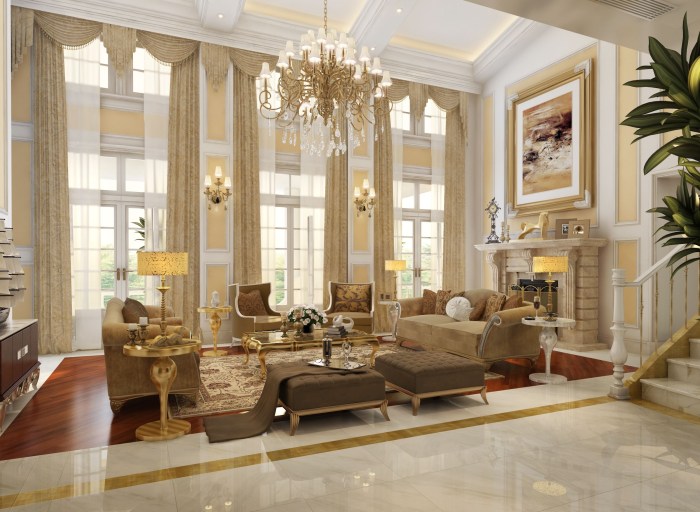
Embark on a journey through the world of Luxury Interior Design Styles, where opulence meets functionality to create breathtaking spaces that define sophistication and luxury.
Explore the fusion of high-end materials, statement pieces, and exquisite design concepts that elevate interiors to unparalleled levels of elegance.
Luxury Interior Design Styles
Luxury interior design aims to create spaces that exude sophistication, elegance, and opulence. It involves the use of high-end materials, exquisite finishes, and a keen eye for detail to create a lavish and luxurious environment.
Popular Luxury Interior Design Styles
- Art Deco: Characterized by geometric shapes, luxurious materials such as gold and chrome, and bold color contrasts.
- Modern: Clean lines, minimalistic design, and a focus on open spaces and natural light.
- Contemporary: Incorporates current design trends with a mix of traditional and modern elements, creating a timeless look.
- Traditional: Rich textures, ornate details, and classic furniture pieces that exude elegance and charm.
High-End Materials and Finishes
Luxury interior design often incorporates materials such as marble, granite, high-quality woods, and luxurious fabrics like silk and velvet. Finishes like gold leaf, crystal accents, and intricate carvings add a touch of glamour and sophistication to the space.
Importance of Statement Pieces
In luxury interior design, statement pieces play a crucial role in creating a focal point and adding personality to a room. Whether it’s a grand chandelier, a sculptural piece of furniture, or a piece of art, these statement pieces help elevate the overall aesthetic and style of the space.
Functional Spaces

In interior design, functional spaces refer to areas within a living space that are designed to serve specific purposes while maintaining both practicality and aesthetics.
The significance of incorporating functional spaces in luxury interior design lies in creating a harmonious balance between beauty and usability. By carefully planning and designing these spaces, homeowners can enhance the overall functionality and enjoyment of their living environment.
Examples of Functional Spaces:
- Home Offices: A dedicated space for work, equipped with a desk, comfortable seating, and storage solutions.
- Reading Nooks: Cozy corners with bookshelves, comfortable seating, and good lighting for reading and relaxation.
- Mudrooms: Entryway spaces designed to store outerwear, shoes, and accessories, keeping the rest of the home clean and organized.
- Kitchen Islands: Multi-functional areas in the kitchen for food preparation, dining, and socializing.
Balance of Aesthetics and Functionality:
When designing functional spaces in luxury interiors, it is essential to consider both the visual appeal and practicality of the space. Here are some key factors to achieve this balance:
- Choose high-quality materials and furniture that are both stylish and durable.
- Optimize the layout to maximize space efficiency while maintaining a luxurious aesthetic.
- Incorporate smart storage solutions to keep the space organized and clutter-free.
- Select lighting fixtures that enhance the ambiance of the space while providing adequate illumination for various activities.
Garden Ideas
Indoor gardens can add a touch of nature and tranquility to luxury interior spaces, creating a harmonious blend between the indoors and outdoors. They can enhance the overall aesthetic appeal and provide a sense of relaxation and well-being.
Indoor Gardens
- Create a stunning indoor garden by incorporating a variety of plants such as succulents, ferns, and orchids in elegant planters or terrariums.
- Consider vertical gardens or living walls to maximize space and create a lush green backdrop in a luxury setting.
- Install a small water feature like a fountain or a mini pond to add a calming element to the indoor garden.
Benefits of Indoor Gardens
- Indoor gardens can improve air quality by reducing toxins and increasing oxygen levels, promoting a healthier environment.
- They can enhance mood and reduce stress levels, providing a serene retreat within the luxurious confines of the interior space.
- Indoor gardens can serve as focal points, adding visual interest and sophistication to the overall design.
Tips for Integrating Gardens into Luxury Design
- Choose plants that thrive indoors and require minimal maintenance to ensure longevity and vitality of the garden.
- Consider the lighting conditions and placement of the indoor garden to optimize growth and visual impact.
- Coordinate the color palette of the plants with the existing interior design to create a cohesive and harmonious look.
Interior Design
Interior designers play a crucial role in creating luxury spaces by combining functionality with aesthetic appeal. They have the expertise to transform a blank canvas into a personalized and visually stunning environment that reflects the homeowner’s style and preferences.
Designing Process
The process of designing a luxury interior typically starts with a concept development phase where the designer works closely with the client to understand their vision and requirements. This is followed by creating mood boards, sketches, and 3D models to visualize the space before the actual implementation begins. The designer then selects high-quality materials, furniture, and finishes to elevate the overall look of the interior.
Color Schemes, Textures, and Lighting
Choosing the right color schemes, textures, and lighting is essential in creating a luxury interior. Neutral tones like cream, beige, and gray are often used as a base, while pops of bold colors can add drama and sophistication. Incorporating a mix of textures such as velvet, silk, and leather can add depth and richness to the space. Proper lighting, including ambient, task, and accent lighting, can enhance the overall ambiance and highlight key features of the interior.
Personalizing the Design
To personalize a luxury interior design, it’s important to incorporate elements that reflect the homeowner’s personality and tastes. This can be achieved through custom furniture pieces, unique artwork, family heirlooms, and personal collections. Mixing vintage with modern, incorporating personal mementos, and showcasing hobbies or interests can add a personal touch to the space and make it truly unique.
In conclusion, Luxury Interior Design Styles offer a gateway to crafting spaces that exude luxury, sophistication, and personal style, ensuring every corner reflects a refined taste and grandeur.
Quick FAQs
How important are statement pieces in luxury interior design?
Statement pieces play a crucial role in adding character and personality to luxury interiors, serving as focal points that elevate the overall design aesthetic.
What are some examples of functional spaces in luxury interior design?
Functional spaces in luxury design can include media rooms, wine cellars, and spa-like bathrooms, offering both practicality and indulgence.
Why is it essential to balance aesthetics and functionality in designing functional spaces?
Creating a harmonious blend of aesthetics and functionality ensures that luxury spaces not only look stunning but also serve their intended purpose effectively.


